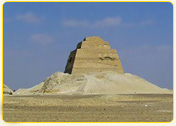


Zoser's step pyramid
King Zoser’s main architect, Imhotep, had a brilliant idea in the 27th century BCE. Why not repeat the tomb structure of earlier times until it reached a summit? What better way to impress the gods and leave a lasting legacy? This innovation led to the creation of the step pyramid, which became the precursor to the grand structures like the Pyramids of Giza.
The old style tomb was the mastaba, a rectangular, massive structure that rose from the ground to a height of anywhere between a few meters and up to 10 meters. This design would eventually evolve into the towering Pyramids of Giza, which remain one of the most famous Egypt pyramids in Giza and are a key highlight on any Pyramids of Giza Tours.
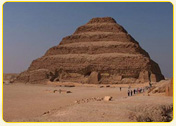
Pyramids beyond history
The necropolis of Dahshur belongs to two periods of ancient Egyptian history: the 4th and the 12th dynasties, corresponding to the times around 2600 BCE and 1900 BCE. Dahshur is home to five main pyramids (plus two subsidiary pyramids), with the most notable being the Red Pyramid and the Bent Pyramid, both built by Snefru, the father of Cheops. Interestingly, these two oldest pyramids are the best preserved, adding to the allure of the Egypt pyramids Giza.
Snefru is regarded as the most active pyramid builder among all Egyptian pharaohs, credited with building three pyramids. The third is his experimental pyramid at Meidum, which might be the first true pyramid in history and a precursor to the grand structures seen in the Egypt pyramids Giza. Why Snefru chose Dahshur for his final pyramids remains a mystery. Why not Saqqara, or the southern location of Meidum? Visitors on Pyramids of Giza Tours can gain a deeper understanding of these fascinating developments in pyramid construction and the evolution of the Egypt pyramids Giza.
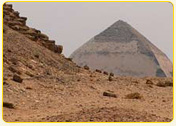
Cheops Pyramid(Khufu)
The largest pyramid in the world is Cheops’ (Khufu), built almost 4,600 years ago. It’s made up of 2,300,000 blocks, with the average weight of 2.5 tons. Some stones weigh up to 15 tons. It was originally 146.5 meters high (before the casing stones were removed), and 230 meters along the base, making it one of the most impressive Egypt pyramids Giza. The grandeur of Cheops’ pyramid is a key highlight for visitors on Pyramids of Giza Tours, showcasing the incredible engineering of ancient Egypt.
The Cheops pyramid may still have more secrets to reveal. In 1993, German scientists accidentally discovered a new chamber within the pyramid, a chamber untouched by thieves. While a corridor to this chamber must be made, it’s not certain if it will ever be opened. As the contents of the chamber remain undisclosed, one can only imagine what might be hidden within. It is known that the architects of the Egypt pyramids Giza made great efforts to protect the tombs from grave robbers, leading them to create confusing passages and false tombs. Perhaps the new chamber in the Pyramids of Giza could even be the long-lost tomb of Cheops himself.
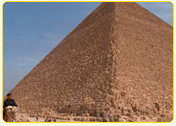
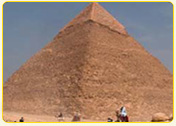
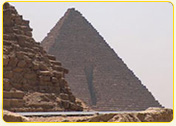
Pyramid of Sesostris 2
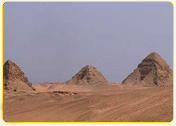
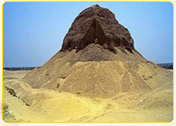
Snefru's first pyramid Attempt
The collapsed pyramid at Meidum may be the first true pyramid, with the Bent Pyramid at Dahshur as its contender. It was a refined Mastaba, leading to the non-stepped pyramid shape seen in the Pyramids of Giza. While not a main stop on Pyramids of Giza Tours, it offers historical significance as a precursor to these grand structures.