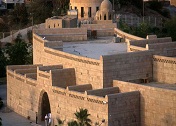


Cairo - The Egyptian Museum
The greatest collection of Egyptian antiquities is, without doubt, that of the Egyptian Museums in Cairo. It is a place of true discovery and, even after many visits, I continue to make new and delightful discoveries every time I venture into its many galleries. A Museums tour in Egypt wouldn’t be complete without exploring this iconic site.
To be sure, the museums can be daunting in the sheer number of antiquities on display, but there is an order within its layout, and it is a dream come true for anyone wanting to study Egyptian antiquities. For those taking a Museums tour in Egypt, this museum stands as the ultimate experience in Egyptian history and culture.
However, the negative side is that the environmental and display conditions leave a great deal to be desired. Labels on some exhibits date from early in the century, and many items have no labels at all. Guidebooks are available at the museums in Egypt, although they are limited to some of the major items.
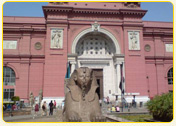
The Coptic Museum
The Coptic Museum in Cairo is a life-like record of one of Egypt’s periods, showcasing various antiques and monuments that reflect the different civilizations that graced the land of Egypt. These include the Ancient Egyptian civilization, the Greek, the Roman, the Coptic, and the Islamic. As part of a rich museums tour in Egypt, the Coptic Museum offers a deep dive into Egypt’s fascinating history.
The museum is located behind the walls of the famous Roman Fortress of Babylon in the ancient district of Cairo (Misr Al-Qadima). The area surrounding the museum is home to lively monuments of open museums, which, together with the Coptic Museum, depict the history of the Coptic Period in Egypt.
Six paramount ancient Coptic churches share the grounds with the Coptic Museum. These churches, dating back to between the 5th and 8th centuries AD, add to the wealth of museums in Egypt that showcase the diverse heritage of the country. The most ancient church among them is Abu Serga, built above the cave where the Holy Family sought refuge as they fled from Herod’s oppression to Egypt.
This makes the Coptic Museum an essential stop on any museums tour in Egypt, offering a unique look into Egypt’s Christian heritage alongside other remarkable museums in Egypt.
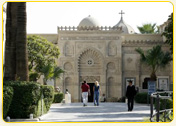
Cairo - The Islamic Museum
When the Ministry of Culture decided to add to its series of specialized museums, one for Islamic ceramics, it chose the palace of Prince Ibrahim in Zamalek, built in 1343 H. (1924 A.D.). This decision was undoubtedly inspired by the palace’s impressive Islamic architecture and decoration, as well as its location in a quiet and fashionable district in the heart of the city, making it a prominent stop in any museums tour in Egypt.
This splendid palace, a masterpiece in its own right, provides an ideal setting for the precious works of Muslim ceramists throughout Islamic history. The Museum of Islamic Ceramics, inaugurated in late 1998, is an integral part of the renovated and refurbished Gezira Art Centre, affiliated with the National Centre for Arts, Ministry of Culture. As one of the unique museums in Egypt, it holds a significant place in Egypt’s cultural heritage.
The first of its kind in the Middle East, the museum houses a rare collection of ceramics acquired from different Islamic countries. These pieces represent various techniques of decoration applied in the Islamic world, from Morocco in the west to Iran in the east, offering a remarkable addition to a museums tour in Egypt. The collection comprises 315 pieces, with 116 from Egypt, showcasing popular styles from the different Islamic eras: Umayyad, Fatimid, Ayyubid, and Mamluk. Additionally, 118 pieces are in Turkish style (Iznik and Kutahia), 25 in Syrian style (Al-Raqqa), 48 in Iranian style, 2 in Andalusian style, 2 in Iraqi style, and one piece in Moroccan style.
These ceramics include vessels, jars, tiles, mugs, jugs, bowls, plates, pitchers, vases, lanterns, and cups, with the oldest dating back to the second century Hijra and the most recent to the twelfth century Hijra. The pieces, carefully selected from the acquisitions of the Gezira Museum (150 pieces), Islamic Art Museum (159 pieces), and 6 pieces from the very palace housing the Museum of Islamic Ceramics, are displayed on two floors covering a total area of 420 square meters. This museum stands as one of the top museums in Egypt and a must-see on any museums tour in Egypt, offering visitors an unparalleled view into Islamic art and ceramics.
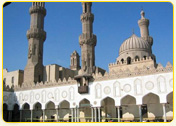
Luxour - Museum
The small museums at Luxor are a beautiful building dedicated to displaying stunning sculptures, making it a highlight of any museums tour in Egypt. The pieces in this collection come from the Middle and New Kingdoms, offering a fascinating glimpse into Egypt’s ancient history. While the displays are quite dramatic, the lighting is not very bright, which can make it difficult for photographers, especially since flash is prohibited, a common rule in many museums in Egypt.
Museums like this one are incredibly valuable for preserving Egypt’s heritage and showcasing its artistic history, making them an essential part of the country’s rich cultural tapestry. As part of a museums tour in Egypt, these sites provide an opportunity to explore Egypt’s artistic achievements, such as the representations of Akhenaten. He was famously depicted with an extremely long neck and narrow face, and some artists even portrayed others in a similar manner, influenced by his own appearance. However, the famous head of his wife, Nefertiti, which was taken to Germany, shows that great artists could avoid such errors.
I am grateful to Katherine Griffis-Greenberg and Joanna Aksamit for correcting some of the errors I made in my initial composition of this page. Thanks also to Dr. Joern Osselman, who suggested further changes, which I have made, ensuring the accuracy of this account of one of the must-see museums in Egypt during your visit.
Aswan - Nubia Museum
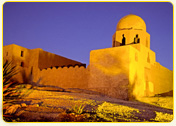
The Nubia Museum in Aswan harbors the history of the “Land of Gold,” as the word Nubia in the Hieroglyphic language of ancient Egypt, where pictorial symbols represent meaning and sounds, translates to the “Land of Gold.” This rich land has long been abundant in monumental treasures, making it an essential stop on any museums tour in Egypt.
As one of the most important museums in Egypt, the Nubia Museum showcases a vast array of historical and cultural artifacts that reflect the grandeur of Nubian civilization. A number of factors have combined to create this remarkable museum, including its status as the only open-air museum of its kind, making it a unique part of a museums tour in Egypt.
The museum’s creation took ten years of hard work and dedication, resulting in a stunning institution that stands as a testament to Nubian heritage. Additionally, it is a wonderful model of international cultural cooperation, proudly representing the United Nations Educational, Scientific and Cultural Organization (UNESCO), further elevating the museum’s significance in the global cultural landscape.
This museum, as part of the broader network of museums in Egypt, offers a unique and immersive experience for visitors, enriching the journey of anyone exploring Egypt’s monumental history through its diverse museums.